
If you’re planning how to travel around Korea without having to take domestic flights (not always cheap) or take the KTX (unfortunately, also not cheap), your best answer is certainly buses. That’s right, buses.
In this guide, I’ll run through everything you need to know about taking intercity and express buses across Korea. Whether you’re doing a quick day trip, or spending a weekend in Gyeongju, or checking out Jeonju’s famous hanok village, buses are a great way to get around.
Types of Long-distance buses in Korea
There are two types of long-distance buses you’ll come across:
Express Buses (고속버스 / Gosok Beoseu)
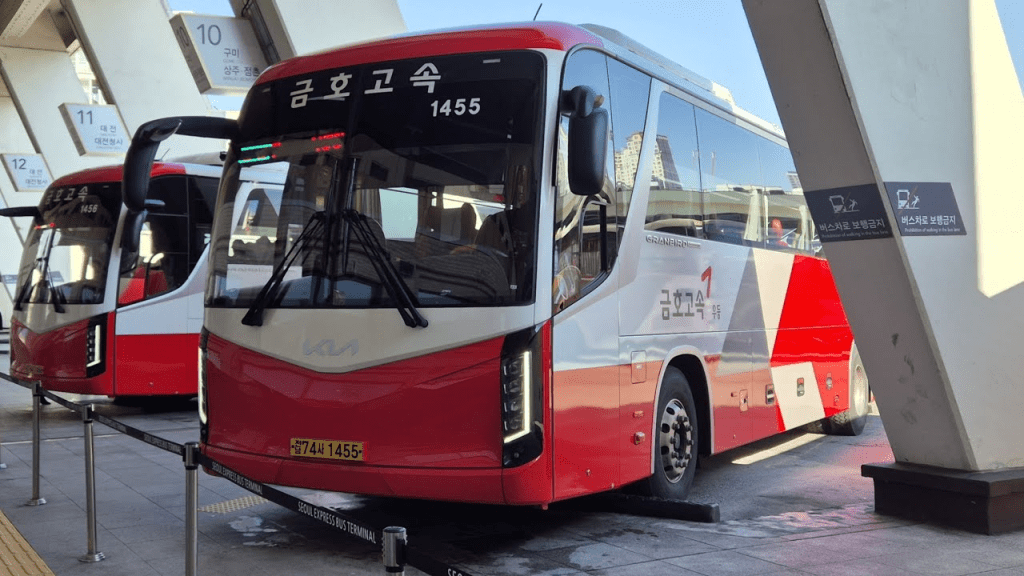
These are perfect for getting between major cities. They stick to expressways, so they’re usually faster. There are different seat options too:
- Standard: these are pretty basic but comfy enough
- Deluxe (우등): wider seats, more legroom
- Premium: think reclining seats, USB ports, even leg rests for overnight trips
Intercity Buses (시외버스 / Si-oe Beoseu)
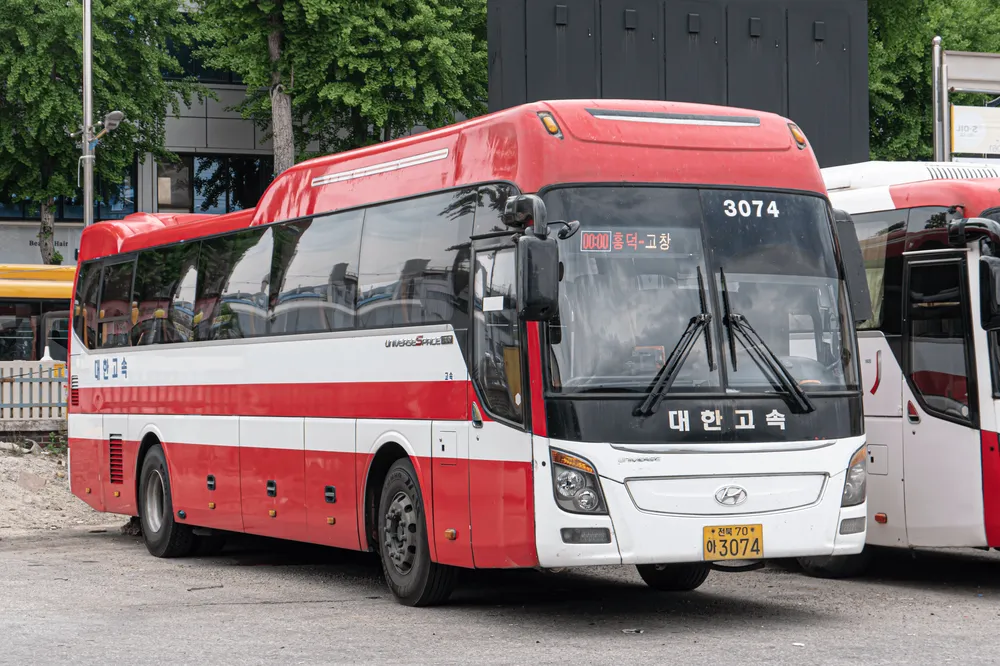
Intercity buses go to smaller towns and off-the-beaten-path spots. They’re not quite as fast, but super handy if you’re exploring beyond the big cities.
Major Korea bus terminals
If you’re traveling between cities in South Korea, chances are you’ll be passing through one of the country’s major bus terminals. These terminals are modern, well-organized, and often located near subway stations, making it easy for both locals and tourists to navigate.
Here’s a breakdown of some of the most important and frequently used bus terminals across the country:
Seoul Express Bus Terminal (서울고속버스터미널)
Location: Gangnam District, connected to Express Bus Terminal Station (Lines 3, 7, 9)
Routes: Nationwide – Busan, Gwangju, Daegu, Daejeon, and more
This is Seoul’s largest and busiest terminal, handling express buses that run across the country. It’s housed within the Central City complex, so you’ll also find shopping malls, food courts, bookstores, and even a Shinsegae department store here. It also has an underground shopping center called Goto Mall, which spans over 800 meters and connects the Express Bus Terminal with multiple subway lines.
Dong Seoul Bus Terminal (동서울종합터미널)
Location: Gwangjin District, right next to Gangbyeon Station (Line 2)
Routes: Mostly eastbound – Sokcho, Chuncheon, Gangneung, and other parts of Gangwon-do
Perfect if you’re planning a trip to the mountains, beaches, or ski resorts in Korea’s eastern region. It’s a bit smaller than the Express Bus Terminal but more convenient for destinations along the east coast.
Central City Terminal (센트럴시티터미널)
Location: Inside the same complex as the Seoul Express Bus Terminal (Lines 3, 7, 9)
Routes: Primarily to the southern provinces – Busan, Jeonju, Gwangju, and more
Central City and Seoul Express Bus Terminal are technically separate but share the same complex, so double-check your ticket to avoid going to the wrong gate!
Busan Central Bus Terminal (부산종합버스터미널)
Location: Nopo Station (Line 1), North Busan
Routes: To Seoul, Gyeongju, Daegu, Ulsan, and other key cities
This is the main departure point if you’re heading north from Busan. It’s modern, with convenience stores, food options, and clear signage in Korean and English.
Gyeongju Express & Intercity Bus Terminals (경주버스터미널)
Location: Both are centrally located within Gyeongju, walking distance from each other
Routes: To Seoul, Busan, Daegu, Daejeon, and surrounding smaller towns
Gyeongju is a major historical destination, and its terminals make it super accessible. From here, you can get to nearby attractions like Bulguksa Temple or head onward to major cities.
Daegu Dongbu Bus Terminal (동대구터미널)
Location: Near Dongdaegu Station (Line 1 and KTX)
Routes: To Seoul, Busan, Gwangju, and other nationwide destinations
This terminal is conveniently connected to the KTX high-speed rail, so you can choose between bus or train depending on your travel time and budget.
Jeonju Express Bus Terminal (전주고속버스터미널)
Location: About 10–15 minutes from Jeonju Hanok Village by taxi
Routes: To Seoul, Daejeon, Gwangju, Busan, and more
Jeonju is a popular cultural destination, and the express bus terminal is the most common entry point for travelers coming from Seoul and other major cities.
Incheon Bus Terminal (인천종합버스터미널)
Location: Connected to Incheon Bus Terminal Station (Line 1)
Routes: To nearby cities like Suwon, Daejeon, and Seoul suburbs
If you’re staying near Incheon or arriving early for a flight at Incheon International Airport, this terminal can be a convenient alternative to Seoul’s bus terminals.
How to buy intercity bus tickets in Korea
At the Terminal
Just head to the counter or use a self-serve kiosk. Most machines have English options. You can pay by card or cash.
Online
- Kobus: Great for express buses
- TxBus: Book in advance and choose your seat
- Bustago: Good for intercity routes
Pro tip: If you’re traveling on a weekend or during Korean holidays, book early!
Popular intercity bus routes in Korea
| Route | Bus Type | Travel Time | Price Range (KRW) |
|---|---|---|---|
| Seoul → Busan | Express | 4–5 hrs | ₩23,000–₩35,000 |
| Seoul → Gyeongju | Express | 3.5–4.5 hrs | ₩19,000–₩30,000 |
| Seoul → Jeonju | Express | 2.5–3 hrs | ₩12,000–₩20,000 |
| Seoul → Sokcho | Intercity | 2.5–3 hrs | ₩13,000–₩18,000 |
| Busan → Daegu | Express | 1.5–2 hrs | ₩10,000–₩17,000 |
Must-have apps for intercity bus travel in Korea
Traveling between cities in Korea by bus is convenient and affordable — but having the right apps on your phone can make the experience even smoother. From buying tickets in advance to navigating bus terminals in real time, I would highly recommend these apps if you are planning intercity bus journeys across Korea.
1. Kobus (고속버스)
Best for: Booking express bus tickets online
Kobus is the official app for booking express buses (고속버스) across Korea. It supports routes between major cities like Seoul, Busan, Gyeongju, Daegu, and more.
- Allows online reservations and seat selection
- Shows real-time departure schedules and availability
- Credit card and mobile payment options available
Language support: Korean only, but can be used with Google Translate or Papago
Available on Android & iOS
2. TxBus (티머니버스)
Best for: Intercity bus routes (시외버스)
TxBus handles bookings for intercity buses, which often serve smaller towns and less-traveled routes.
- Covers many terminals not supported by Kobus
- Lets you view departure times, pricing, and seat options
- Mobile ticketing and digital payment available
Language support: Korean only
Available on Android & iOS
3. Naver Map (네이버지도)
Best for: Navigating terminals and planning routes
Naver Map is a lifesaver when you’re trying to find the correct terminal entrance, gate, or nearby facilities.
- Offers accurate bus stop and terminal locations
- Displays timetables, route options, and walking paths
- Great for figuring out public transport connections to terminals
Language support: English, Korean, Japanese, Chinese
Available on Android & iOS
4. KakaoMap (카카오맵)
Best for: Real-time directions & local info
KakaoMap is another excellent map app, often more detailed than Google Maps in Korea.
- Provides real-time transit info and bus arrival times
- Street view and facility navigation are very accurate
- Often used alongside Kakao T for local taxis to/from terminals
Language support: English and Korean
Available on Android & iOS
5. Papago (파파고)
Best for: Translating signs, schedules, and conversations
Papago, developed by Naver, is a must-have translation app for non-Korean speakers.
- Use the camera translator to read bus tickets and terminal signs
- Translate spoken conversations with ticket staff
- Works great even for app interfaces that don’t support English!
Available on Android & iOS
6. Kakao T
Best for: Getting to/from the bus terminal
Need to grab a ride to the bus terminal? Kakao T is Korea’s most reliable taxi-hailing app.
- Request taxis easily, even in smaller cities
- Shows fares, ETAs, and driver info
- Offers other features like bike sharing and car rentals
Available on Android & iOS (limited English)
So there you have it — your complete, tried-and-tested guide to getting around Korea by bus! Whether you’re zipping from Seoul to Busan or heading off the beaten track to smaller towns, intercity buses are seriously one of the easiest (and most affordable) ways to explore the country. With comfy seats, clean terminals, and super scenic routes, you’ll probably find yourself preferring the bus over the train. Just remember to download a few handy apps, arrive a little early, and maybe pack a snack or two!
PIN THIS!


Leave a Reply