
Hallabongs are everywhere in Jeju, from drinks to desserts, and even in the backyards of almost every Jeju resident!
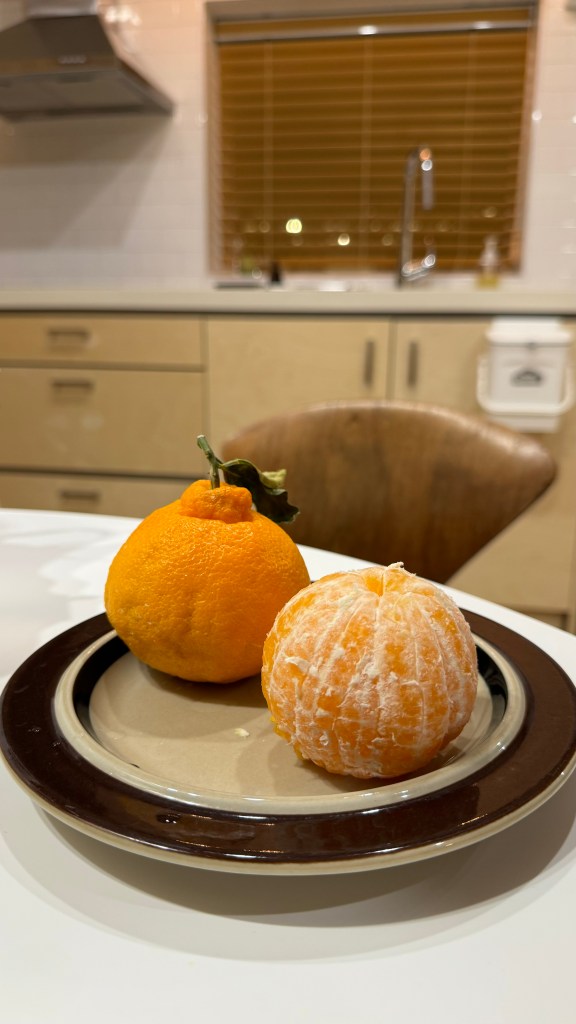
Why pick hallabongs at a hallabong farm?
Even though hallabongs are ubiquitous on the island, they’re actually not the cheapest fruit around.
Of course, they’re comparatively cheaper if you buy them in Jeju, but we realised that a lot of the stalls in the markets (Dongmun, Seogwipo Maeil Olle) are selling hallabongs at prices that would still hurt your wallet if you were to buy in a larger quantity.
We had the wildest idea to lug some hallabongs back to Singapore (which we managed to! and is perfectly legal!) and realised it might be cheaper to go directly to a hallabong farm for wholesale purchase.
We thought through about it and figured it would be a great experience to try picking our own hallabongs in Jeju. Hence, we ended up finding a farm to pick and bring home hallabongs at a lower price!
Hallabong picking experience at Haepoom Farm
After checking around some blogs & websites, we eventually settled on Haepoom Farm, which was more convenient for our itinerary that day. It was also listed on the Visit Jeju website, so we thought it should be pretty legit.
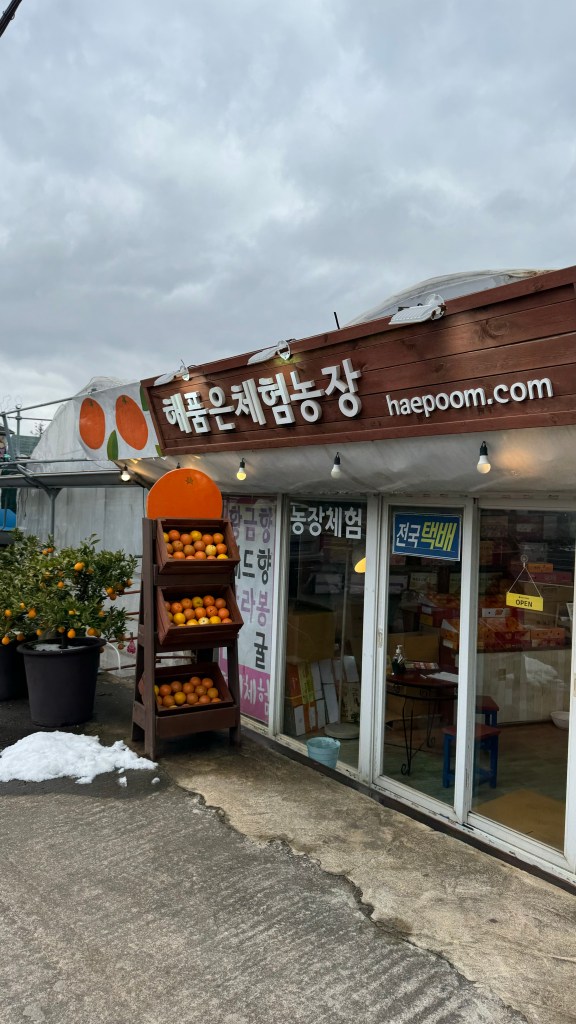
The weather was not fantastic, hence it was only manned by one staff when we reached.
We asked him about picking hallabongs and he told us that it would be KRW8,000 (about USD 8) for 1kg, which was cheaper than what we saw in the markets (cheapest was KRW 10k).
We were warned though that 1kg was about only 3-4 hallabongs because these citron fruits were HUGE and heavy!
He also explained that the farm had 2 kinds of tangerines: hallabongs and cheonhyehyang (crossover between tangerine and orange).
He reminded us that cheonhyehyang was a little more sour and came with a different rate (KRW 10k for 1 kg). You can see them below side by side for reference:
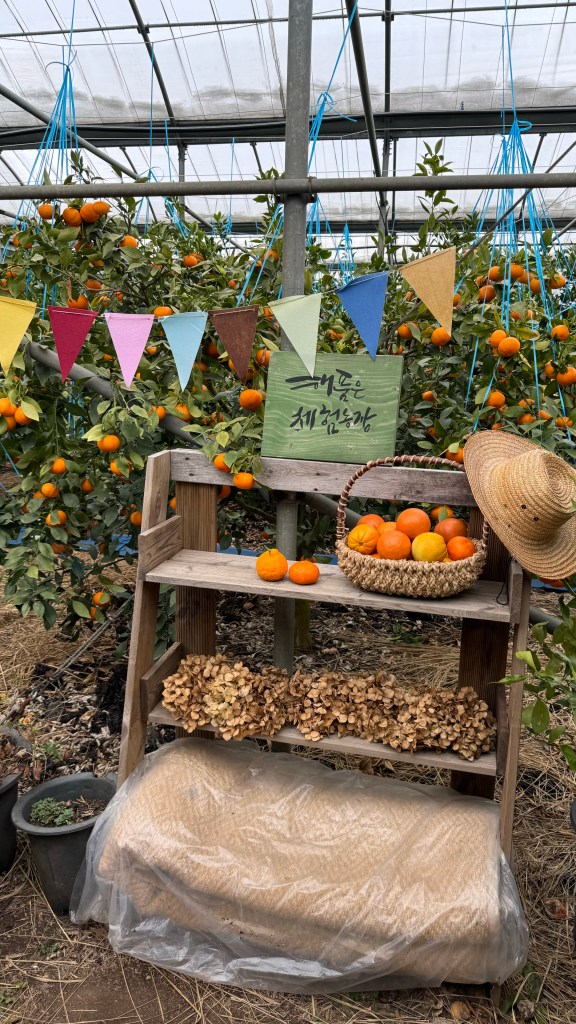
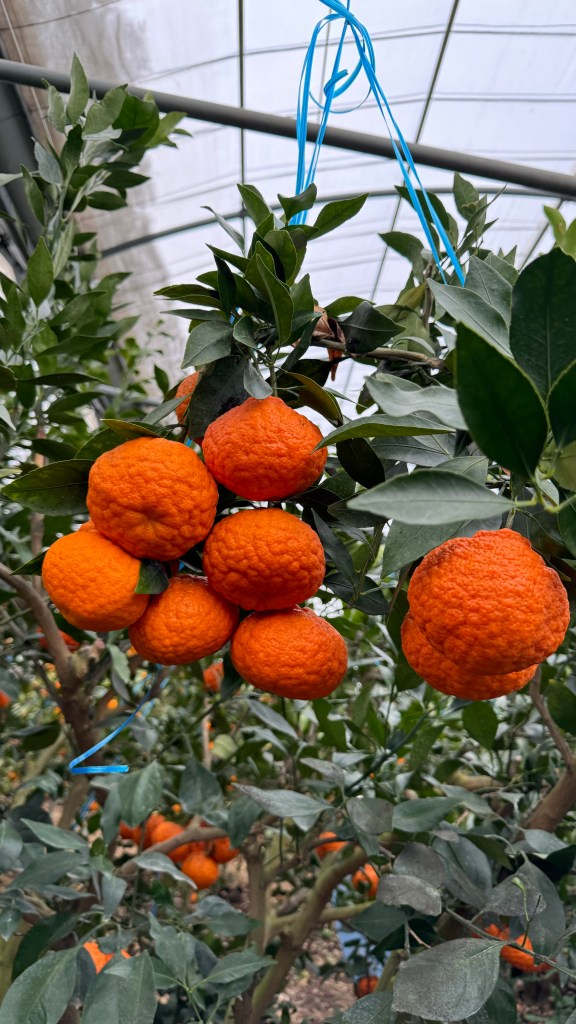
While I loosely used the term ‘pick’, it was mainly using shears to cut the branches and off came the hallabongs! A lot of them were ripe for picking and we had fun going around to search for the juiciest and sweetest hallabongs.
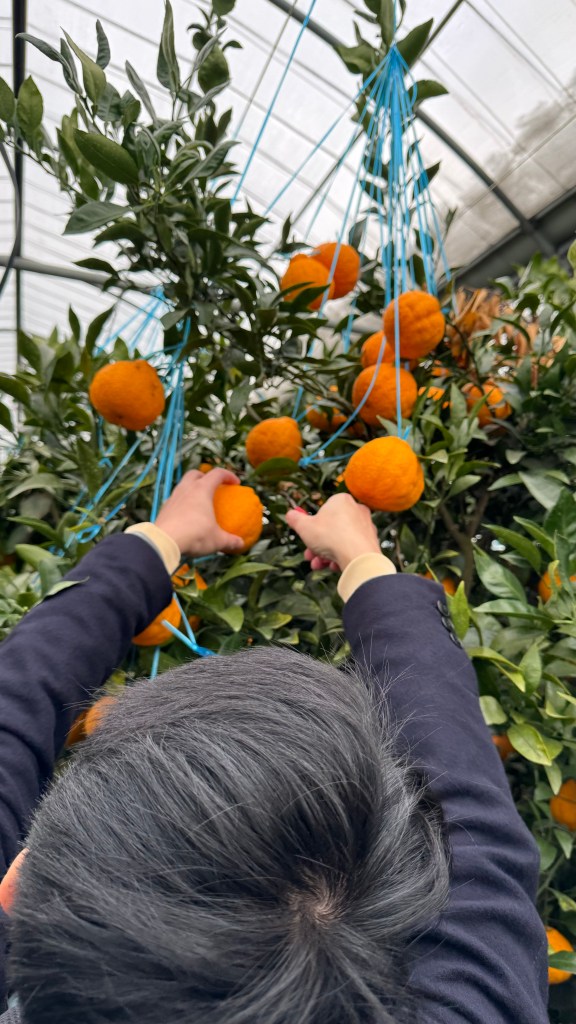
We ended up with 5kg of hallabongs that we actually managed to bring back to Singapore! The staff was also very kind and let us take 2 cheonhyehyang (that we plucked by accident) for free haha.

The fruits made for very nice souvenirs for our families and they also agreed that the hallabongs were delicious! Unfortunately they are really expensive in Singapore and can cost SGD12 for 2 (USD 9).

We really enjoyed the hallabong picking process, which was also faster than we expected! It’s easy to squeeze this into your itinerary even if you don’t have much time to spare.
However, do note that some other farms do offer other add-on experiences such as jam making/tasting, which we unfortunately didn’t have here at Haepoom Farm!
DIRECTIONS
Related Posts:
- Jeju Tangerine Meringue Pie Workshop (failproof!)
- Driving in Jeju: A complete guide, review & tips!
- Ma Maison – Beautiful Jeju Airbnb in a fishing village
FAQ: Jeju Tangerine & Hallabong Picking Season
When is the best time for tangerine picking in Jeju?
The main Jeju tangerine picking season usually starts from late October and continues through winter, with November to January generally considered the peak period. This is when most farms are fully operating and the orchards are filled with bright orange fruit.
If you want the classic Jeju orchard experience with trees heavily covered in fruit, late autumn and early winter are usually the best times to visit.
When is Hallabong season in Jeju?
Hallabong season typically begins later than regular tangerine season. Most Hallabong varieties peak between January and March, although some farms may start earlier depending on weather and greenhouse cultivation.
This is why some visitors who travel to Jeju in spring still manage to experience citrus picking even after standard tangerine season slows down.
What is the difference between regular Jeju tangerines and Hallabong?
Regular Jeju tangerines are smaller, easy to peel, and usually slightly lighter and fresher in flavour. Hallabong is larger, sweeter, and more fragrant, with the distinctive bump on top that makes it instantly recognisable. Hallabong is actually Korea’s version of dekopon citrus and became closely associated with Jeju over the years.
Many people find Hallabong juicier and richer tasting compared to normal tangerines.
Can you go tangerine picking in Jeju year-round?
Some Jeju farms now offer year-round citrus experiences because different citrus varieties ripen at different times. Certain farms grow greenhouse citrus, Hallabong, Cheonhyehyang, Redhyang, and other premium varieties across multiple seasons.
That said, the most photogenic and traditional picking experience still tends to happen between late autumn and winter.
Is December a good time for Jeju tangerine picking?
Yes, December is one of the best months for Jeju tangerine picking. The orchards are usually full, the weather feels properly wintery without becoming unbearably cold, and many farms are actively running tourist experiences during this period.
It is also one of the easiest times to find fresh Hallabong, tangerines, and citrus-themed desserts around Jeju.
Are Jeju tangerine farms toddler-friendly?
Many Jeju tangerine farms are surprisingly family-friendly because the activity itself is simple and low-pressure. Toddlers usually enjoy carrying baskets, touching the fruit, and walking through the orchards. Some farms also include cafés, animal feeding areas, picnic spaces, or small play areas.
That said, the ground can sometimes be uneven or muddy during colder months, so comfortable shoes are important.
How much does Jeju tangerine picking usually cost?
Prices vary depending on the farm and season, but many farms charge somewhere between 5,000 to 10,000 KRW per person for standard picking experiences, often including a small basket or around 1kg of fruit to bring home.
Premium citrus varieties like Hallabong may cost slightly more depending on availability.
Which months are best overall for Jeju citrus experiences?
If your goal is the full Jeju citrus atmosphere, these are usually the best periods:
- Late October to December: Classic tangerine season
- December to February: Peak citrus atmosphere and widest variety
- January to March: Hallabong and premium citrus season
Different farms grow different varieties, so exact timing can vary slightly each year depending on weather and harvest conditions.
PIN THIS!



Leave a Reply