
Even without having travelled to Korea, you may already be familiar with Gwanghwamun Square. It is located right smack in the middle of Seoul, and right opposite Gyeongbokgung!
This public square is commonly used for government-sanctioned exhibitions and activities, including the Seoul International Marathon. However, in recent years, it has also become the go-to place for rallies and demonstrations.
Plus point: This was the filming location for dramas such as Boys Over Flowers, Queen and I!
What to see at Gwanghwamun Square
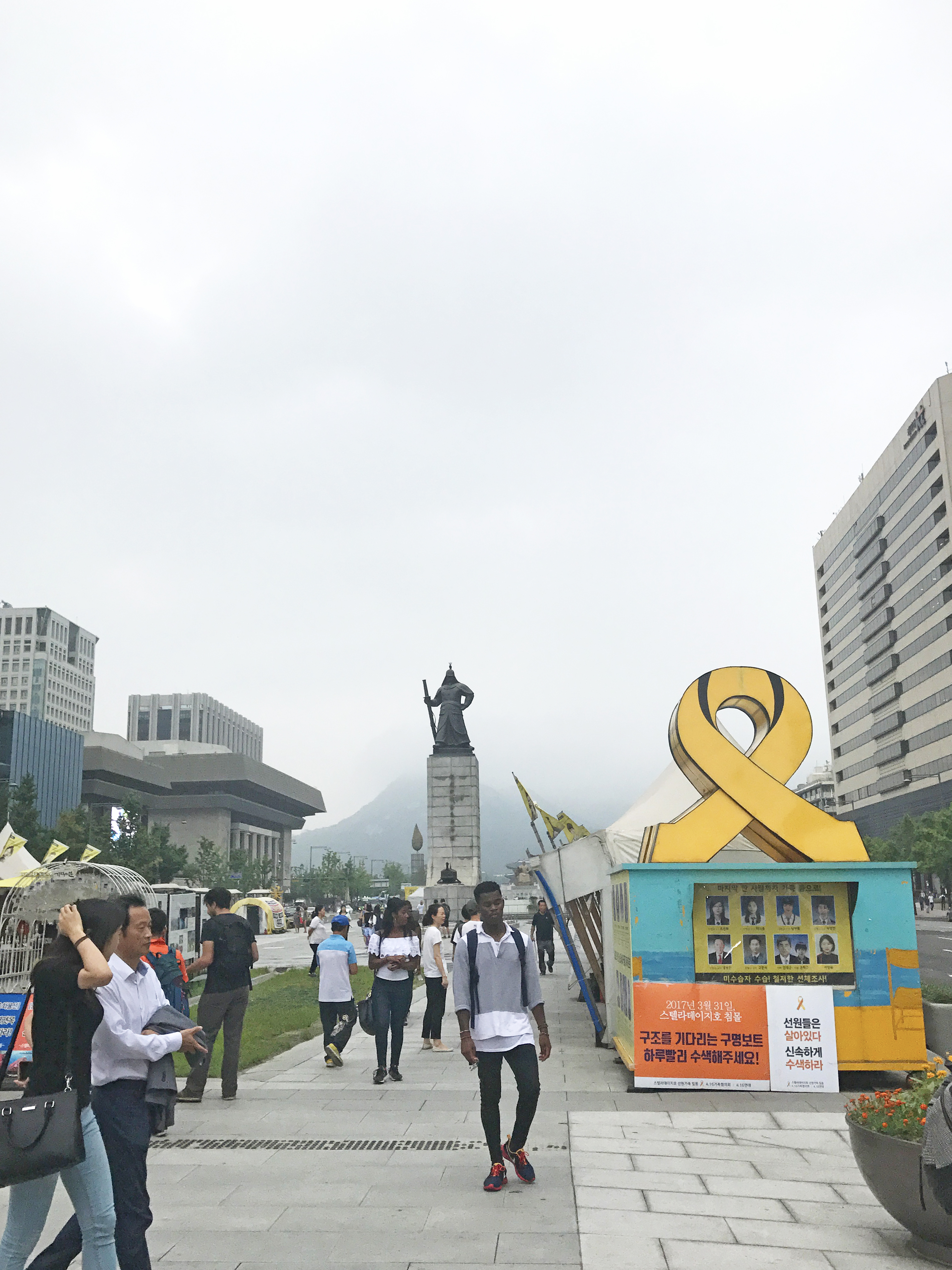
Back in the summer of 2017, the first thing to catch my attention on Gwanghwamun Square was the presence of the tents, as well as the yellow ribbons.
These were actually memorial tents to remember the victims of the 2014 Sewol Ferry tragedy.
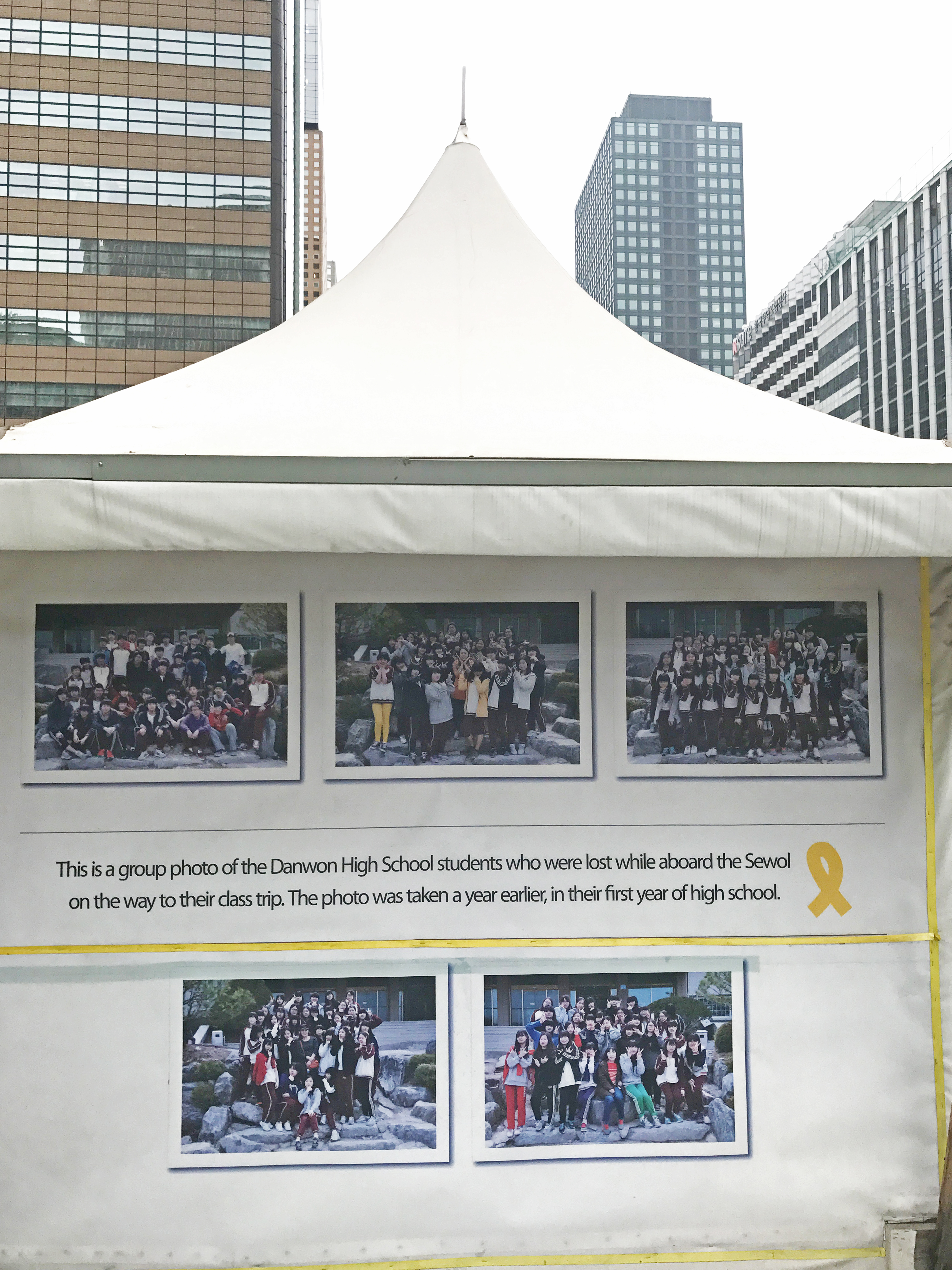
According to Korea Herald, the tents were set up at Gwanghwamun Square in July 2014, where the bereaved families staged a hunger strike calling for a thorough probe into the maritime disaster.
The Seoul city government has unfortunately already removed these memorial tents. What they have done instead is to build a commemorative space at the site.
I think it is really upsetting that such people would actually intentionally destroy a memorial for these innocent victims and their families. I strongly encourage you to have a look at the tents (or commemorative space, depending on when you go), although I personally advise against taking photos of the insides of the tents.
If you are interested in reading more about the memorial and the Sewol Ferry incident, do check out this great article from Korea Exposé.

Now you may be wondering, who is Admiral Yi Sun-Shin?
According to historical records, he was a Korean naval commander famed for his victories against the Japanese navy during the Imjin war in the Joseon Dynasty. Despite the fact that he had no prior naval training, Admiral Yi was never defeated at sea nor lost a single ship under his command to enemy action.
In other words, Admiral Yi is Korea’s national hero!

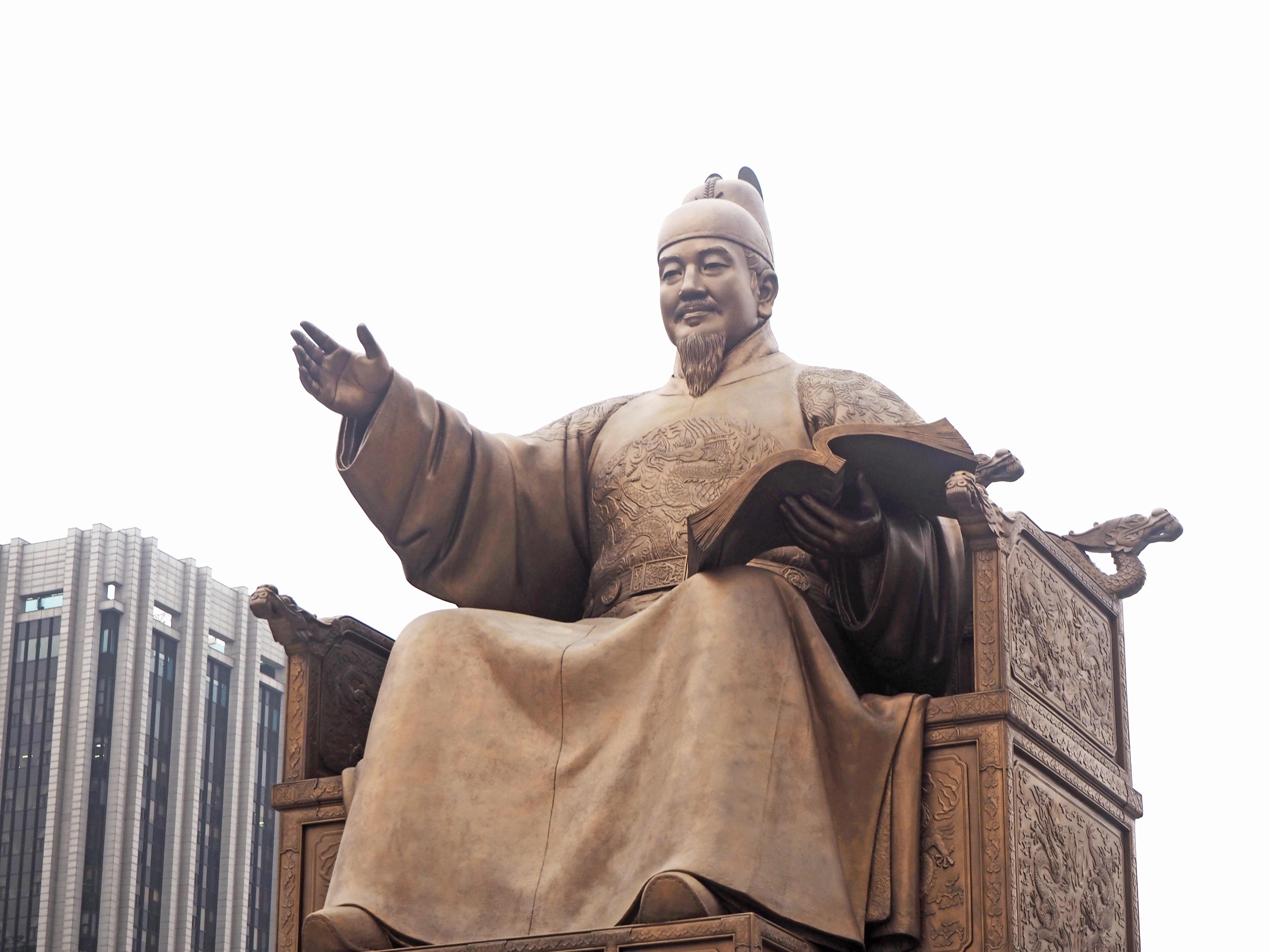
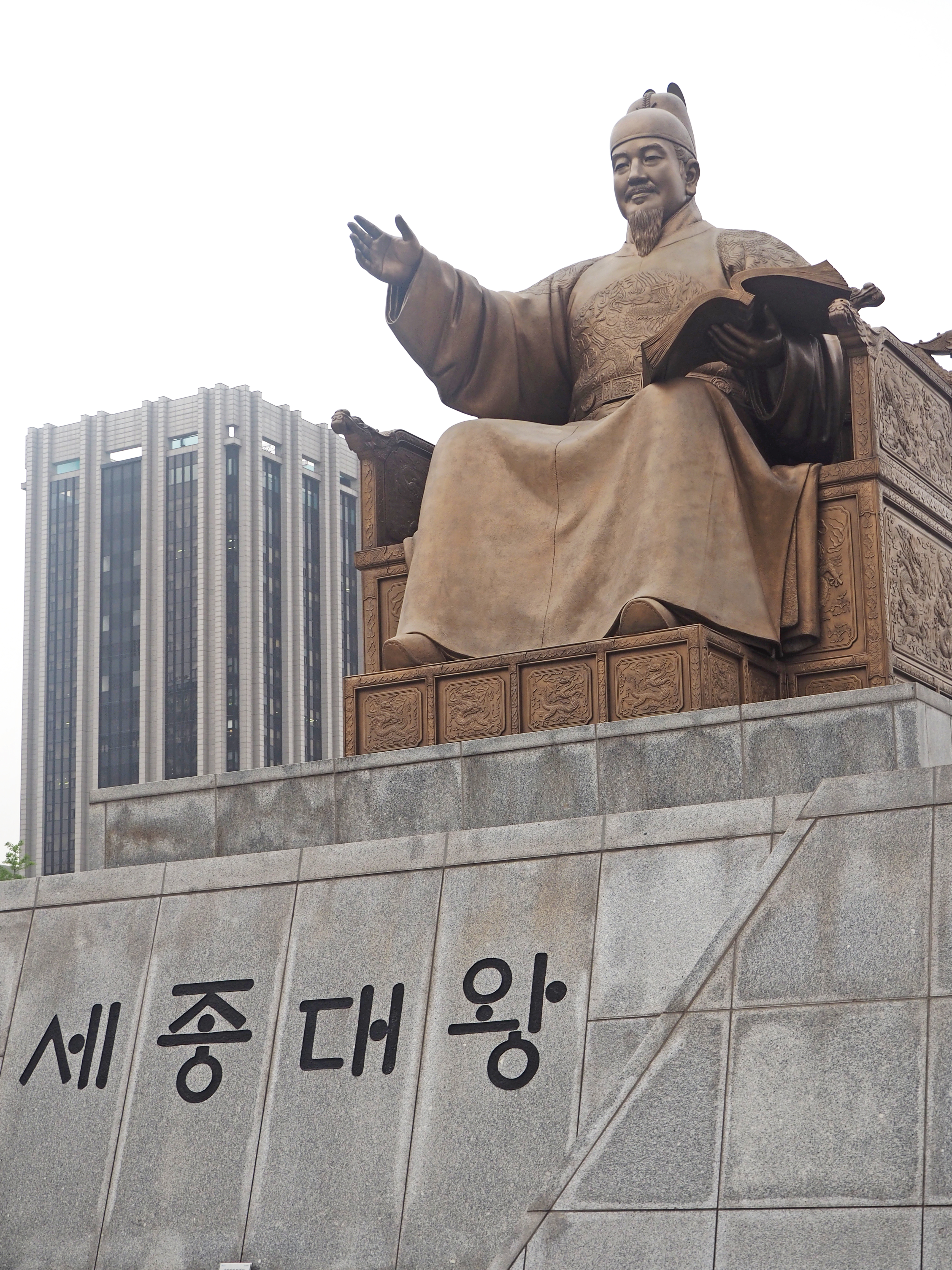
You may also be wondering: of all the kings that they could put up a statue of, why only King Sejong (or Sejong the Great)?
Well, King Sejong is highly regarded among the Koreans for having personally created and promulgated the Korean alphabet Hangul. He also encouraged advancements of scientific technology, and instituted many other efforts to stabilise and improve prosperity in the kingdom.
This statue was actually dedicated on Hangul Day in 2009, in celebration of the 563rd anniversary of the invention of the Korean alphabet by King Sejong. Now you know!

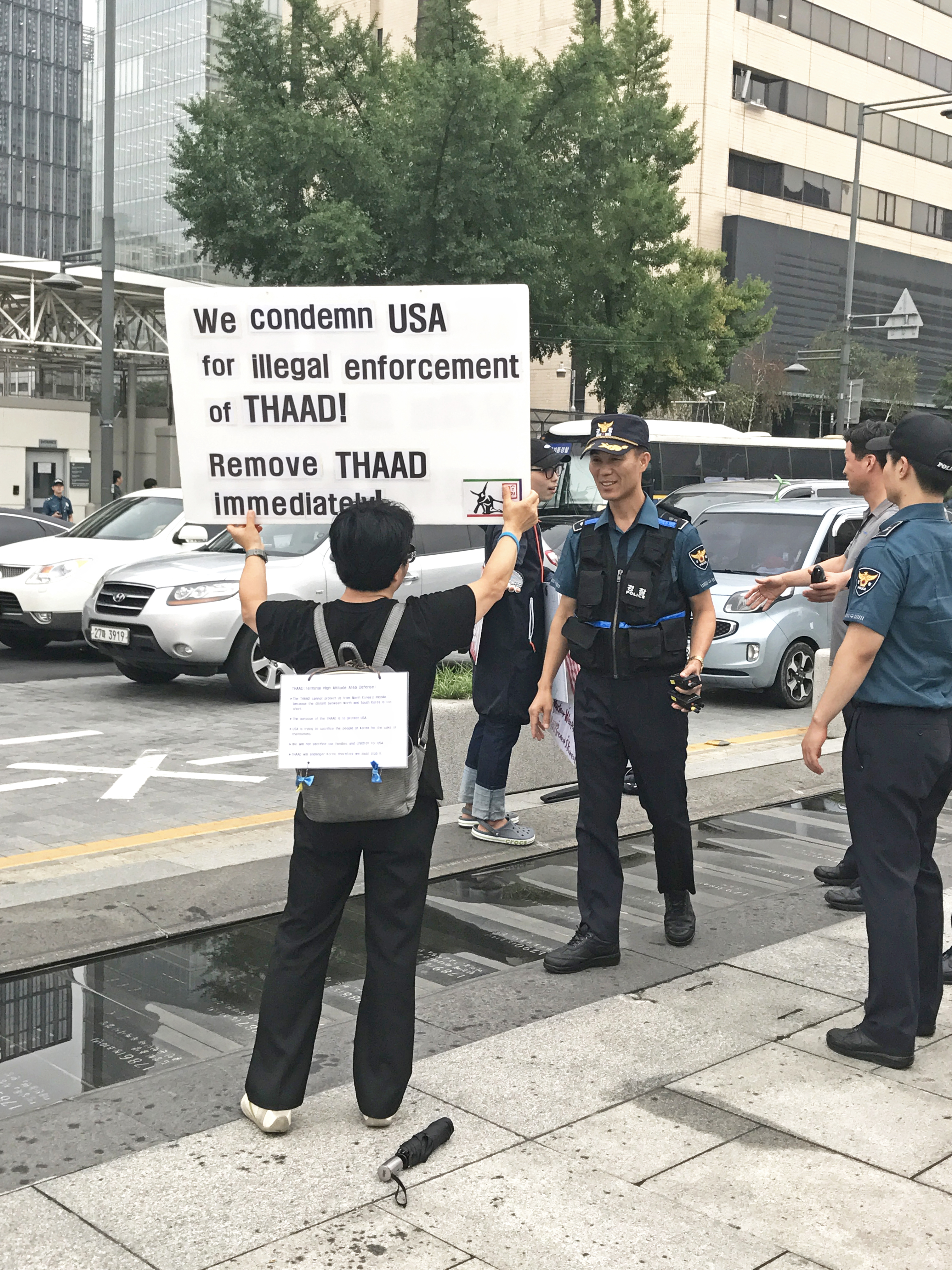
One interesting sight (at least for me) was that of protestors in Gwanghwamun Square. I know protesting is not unseen or unheard of in most countries.
However, it is illegal in Singapore and will probably get you thrown in jail, unless you apply for a permit to do it in Hong Lim Park. So this was an absolute eye-opener for me!
It wasn’t a rowdy protest, just a few people holding placards in English & Korean. Of course, you’ll see a few policemen making sure that the protestors don’t create a ruckus. I think the police tried to get these protestors to leave, but to no avail.

Of course, you also can’t miss out the iconic Gwanghwamun Gate of Gyeongbokgung from afar.
Its close proximity usually makes this landmark an inclusion in an itinerary involving the palace, and you should definitely consider doing that too!
DIRECTIONS
Address: 172, Sejong-daero, Jongno-gu, Seoul
Related Posts:
- Bukchon Hanok Village: must-visit traditional village in Seoul
- Bukchon Hanbok: prettiest hanbok rental shop in Seoul
- Tosokchon Samgyetang: best ginseng chicken soup in Korea!
PIN THIS!



Leave a Reply