
Similar to Korea, Melbourne boasts a huge Chinese community. This is evident not just from the fact that they have Chinatown (and a very vibrant one at that!). Just take a walk down Melbourne CBD – not hard to spot Chinese at every corner!
While Incheon in Korea has its Korean-Chinese Cultural Center, Melbourne has its equivalent called the Museum of Chinese Australian History. Established in 1985, this museum documents and preserves the rich heritage and culture of Australia’s Chinese community.
What to see and do at Museum of Chinese Australian History
The museum also doubles up (sort of) as a Chinatown Visitor Centre. It’s hard to miss the red-brick building that is located right smack in the middle of Chinatown.


Do note that entry to the museum is paid – though the fee is rather nominal!
The Museum of Chinese Australian History spans across five floors – one of them is really the office + toilets so it’s actually more like four floors.
It has a range of permanent exhibitions relating to Chinese experiences in the 19th century Australian Goldfields and hosts an extensive collection that highlight the relationships between Australians and Chinese culture.
One Million Stories: Chinese Australians 100 Years
They recommend that you start exploring the museum from the top floor. The exhibition here is called One Million Stories: Chinese Australians 100 Years. It traces the first nationwide story of the 200 year journey from the first migrant until today.
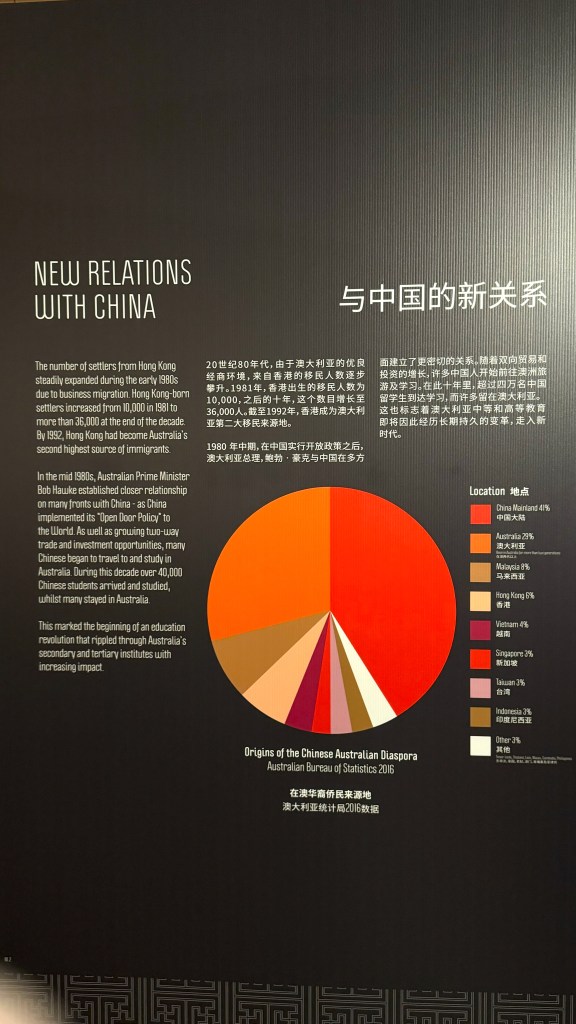
It’s a very detailed look into how families and individuals have settled down and shaped Australian society today. I did find it very interesting, especially considering how many Singaporeans have also moved to Australia.
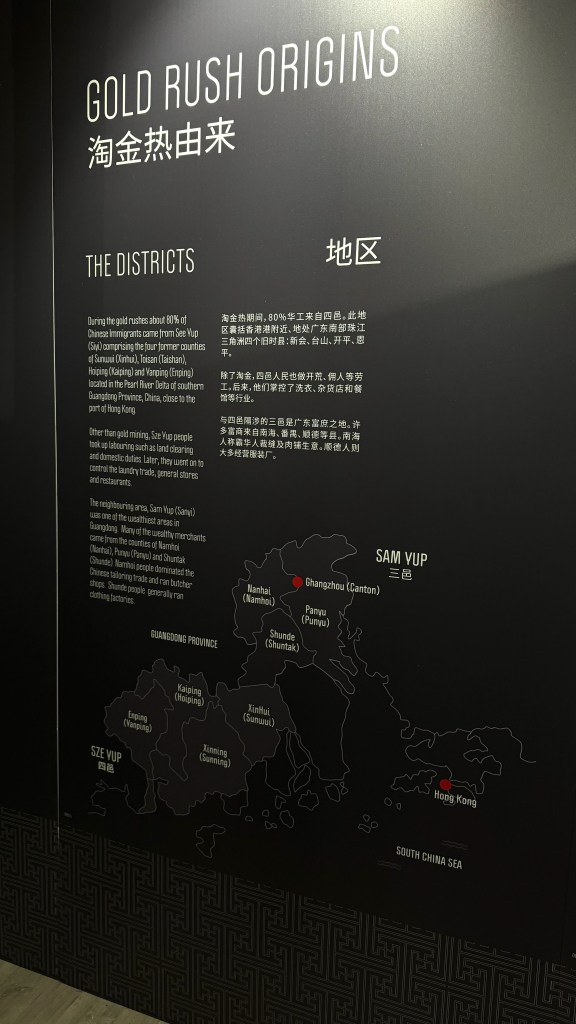
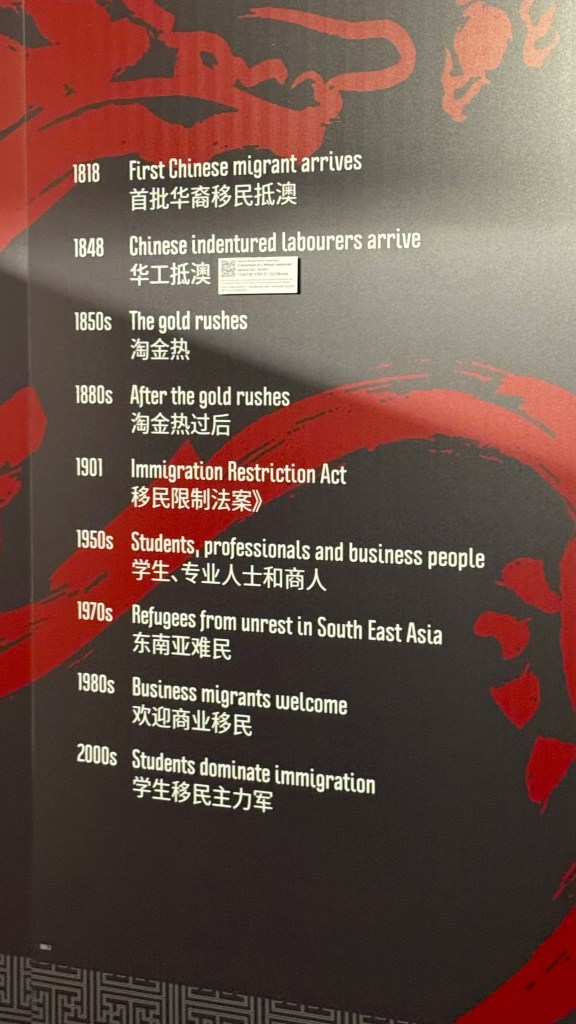
Many came during the Gold Rush, but eventually more settled down in Australia to further their studies or find better job opportunities.

Finding Gold: Chinese on the Goldfields of 19th Century Australia
The first batch of Australian Chinese might be traced all the way back to the Gold Rush, and hence the museum has dedicated a whole floor to the lives & customs of these Chinese.
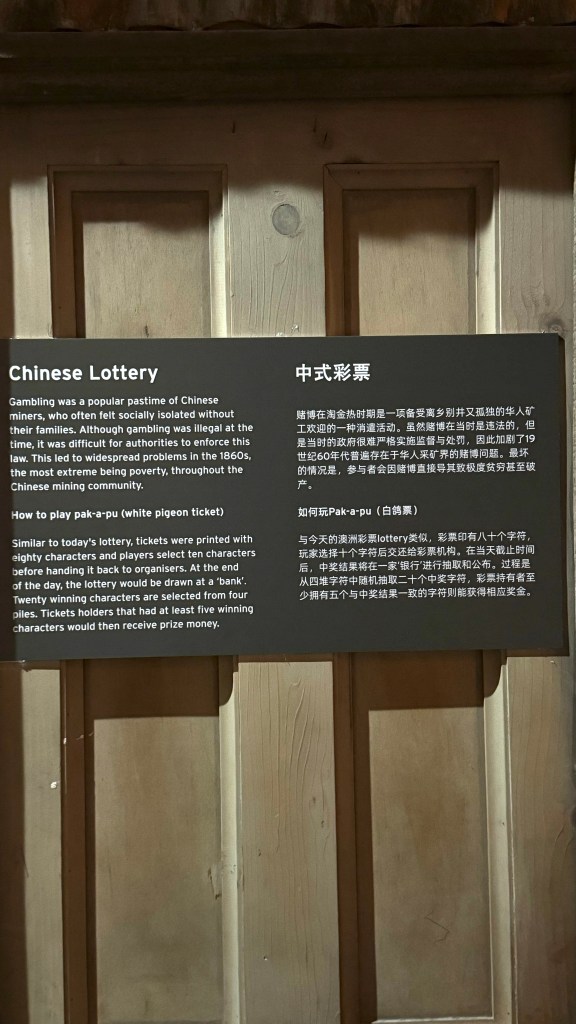
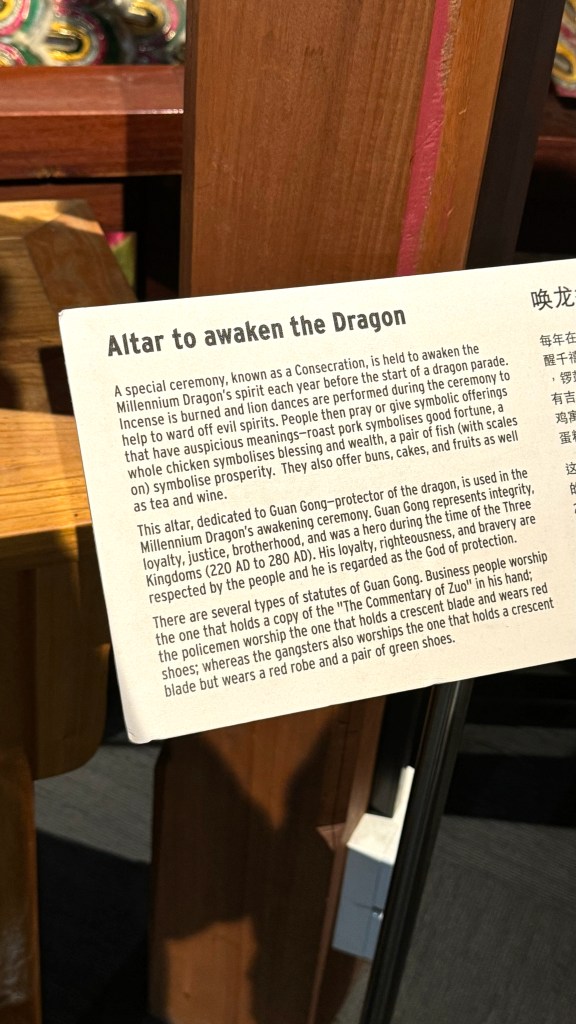
The exhibition, titled Finding Gold: Chinese on the Goldfields of 19th Century Australia is a very interactive and immersive experience. It begins on board a ship sailing from Hong Kong bound for Melbourne and progress through various scenes on a goldfield, including a Cantonese food stall, a tent theatre playing Cantonese Opera, and even a Guan Gong Temple!
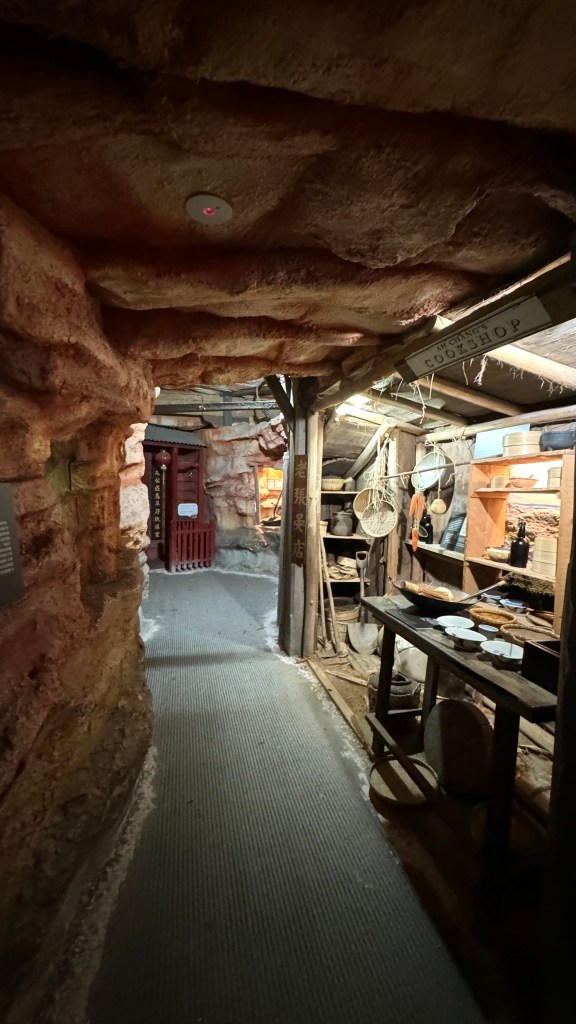

Some discussion on how the Chinese here passed their time, and of course the social and economic problems that some of these presented.
Dragon Gallery
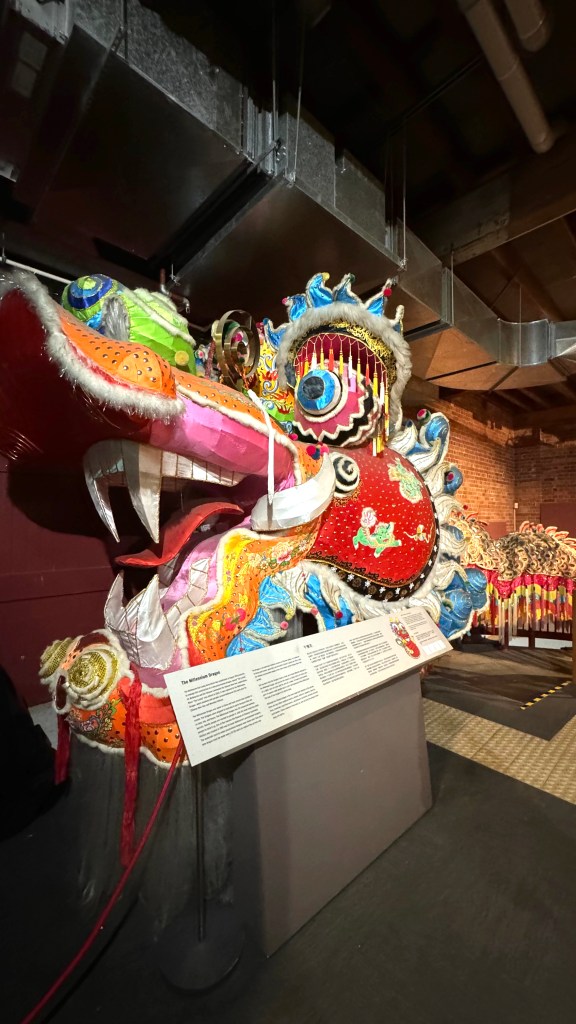
The floor near the reception actually hosts the Dragon Gallery.
The dragon is a central feature of Chinese culture. You may be familiar with this mythical creature, especially if you often witness the Chinese New Year parades!
Here, the Melbourne Dai Loong Association’s Millennium Dragon winds its way from the ground floor to the lower ground. Heads of the last three processional Chinese Dragons that have been used during city-wide parades over the last century are also on display.
Is the Museum of Chinese Australian History worth visiting?
Other than the permanent exhibitions listed above, there is also Han Dynasty: Life Everlasting. This explores a bit more about ancient China – not so much life in Australia, so I didn’t take many photos here.
At the end of our time in the museum, I overheard a tourist from India telling the staff that the parallels between Chinese and Indian immigrants are highly fascinating. Both communities are not afraid to move to faraway lands in search of a better life, and thrive wherever they decide to grow.
I would say that’s a fairly accurate description!
From the exhibits, you can tell it is true that the Chinese diaspora in Australia have flourished despite the discrimination and environment that worked against them. They not only used what they had, but also tightly with one another to make sure that they would prosper together.
As immigration laws in Australia tighten, I do wonder how the Chinese community will adapt and perhaps even change over time. These are thought-provoking questions that may arise as you walk through the exhibits – that discussion alone is certainly worth the visit!
DIRECTIONS
Address: 22 Cohen Pl, Melbourne VIC 3000, Australia
Related Posts:
- ACMI: what to do at the national museum of screen culture
- Melbourne Museum: what to see at this comprehensive museum
- St Kilda Beach: what to do at Melbourne’s most famous beach
PIN THIS!



Leave a Reply